Across the US, HR leaders are confronting a transformation that is reshaping the fundamentals of how organisations function, communicate and build trust. The pace of change in 2025 has pushed HR into a new era where purpose, clarity, and communication are not engagement strategies. They are survival strategies.
As organisations navigate restructures, talent shortages, productivity pressures, cultural fragmentation and AI-driven role disruption, HR leaders are realising that their teams cannot operate as the custodians of processes. They must operate as the custodians of purpose, trust and organisational coherence.
In 2026, credibility will define what separates effective HR teams from the rest. But credibility cannot be earned through messaging, intentions, or reactive decision-making. It must be built through a purpose-driven approach that anchors employees during uncertainty, equips leaders to communicate with confidence and reinforces the organisation’s strategic direction with clarity.
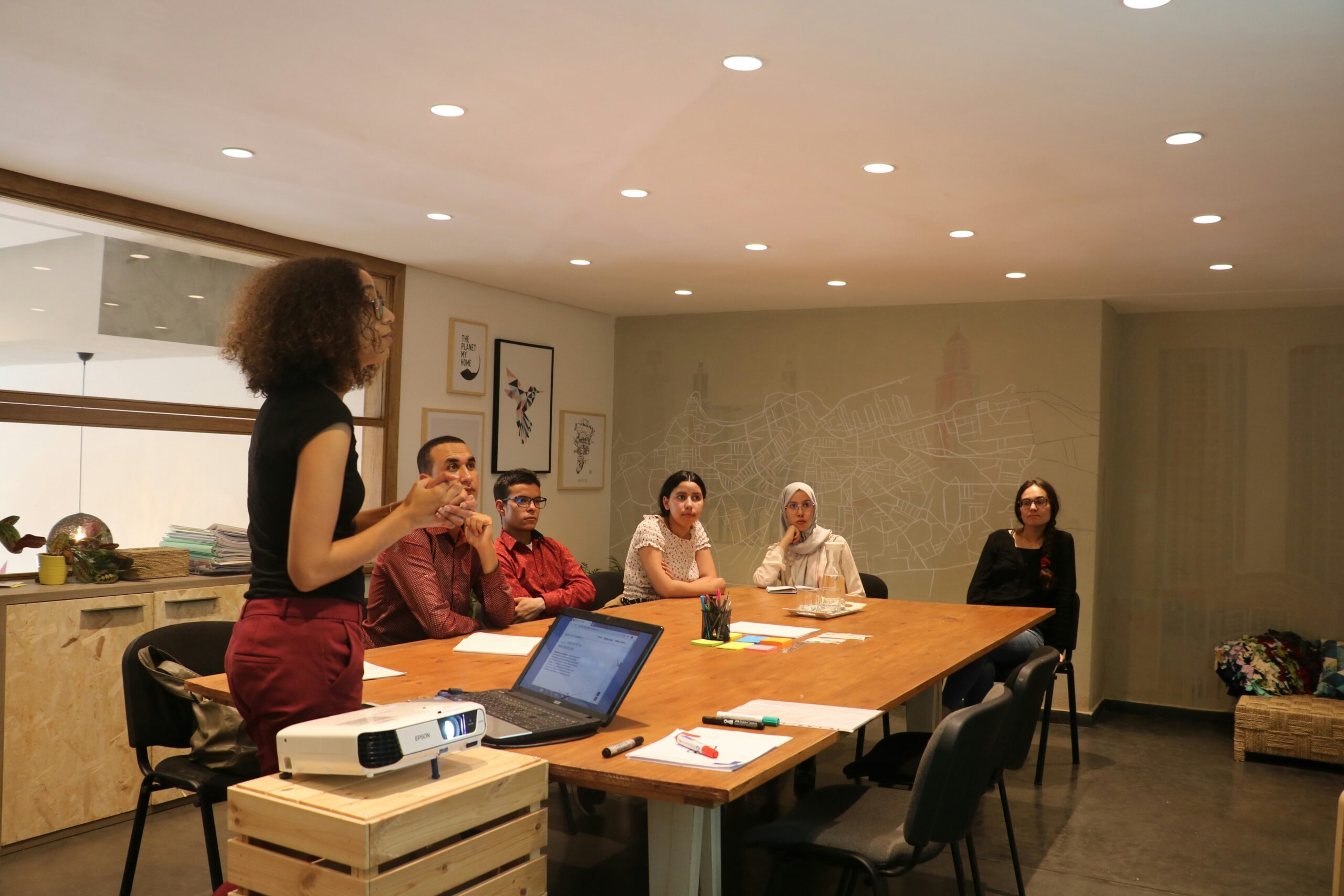
At our latest roundtable, world-class HR leaders shared insights on the role of purpose, why it matters more than ever, and what high-performing HR teams are already doing to prepare for 2026.
Purpose is moving from corporate rhetoric to operational necessity
For more than a decade, purpose has been a strategic buzzword. It appeared in annual reports, brand campaigns, investor packs and onboarding materials. But for many organisations, purpose remained conceptual rather than behavioural.
In 2025, that shifted dramatically.
US HR leaders consistently described purpose as the only stabilising mechanism employees trust during periods of organisational turbulence. When restructures, budget uncertainty, leadership transitions or strategic pivots occur, employees look for coherence. They want to understand not only what decisions are being made, but why they are being made.
A senior HR participant captured this bluntly:
“Purpose is not a communication exercise. Purpose is how employees decide whether they trust us.”
Employees no longer accept purpose statements as symbolic. They interpret alignment, consistency and transparency as evidence that leaders live the purpose they promote. When actions and purpose diverge, trust collapses and speculation spreads quickly.
In 2026, HR teams must evolve from protecting purpose to operationalising it.
This means applying purpose to:
- organisational decisions
- performance conversations
- communication routines
- talent actions
- capability-building investments
- leadership expectations
- reward and recognition frameworks
Purpose is shifting from a narrative asset to a leadership tool.
It is no longer about inspiring employees.
It is about grounding them.
Why credibility is the new currency of HR leadership
Before the pandemic, HR credibility was primarily tied to operational reliability. If HR handled recruitment, compliance, performance processes and employee relations efficiently, credibility was assumed.
The world in 2025 looks very different.
HR leaders across the US repeatedly cited one theme: employees now judge HR by its ability to bring consistency and clarity during complexity. When employees feel confused, disconnected or uncertain, credibility erodes instantly.
Credibility is no longer a byproduct of good processes. It is a byproduct of clarity.
And clarity is a byproduct of purpose.
In the roundtable, HR leaders described the uncomfortable pressure they face when senior leaders delay difficult decisions or avoid honest communication. In these moments, HR is often expected to act as a buffer. But HR cannot maintain credibility if it has to compensate for leadership avoidance.
This tension is shaping new HR capabilities for 2026:
- coaching leaders on confident communication
- simplifying messaging during ambiguity
- reinforcing organisational priorities early
- ensuring communication flows faster and more transparently
- providing reality checks to executive peers
- embedding purpose into conversations leaders struggle to have
Credibility depends on HR’s ability to ensure employees understand what is happening and why.
When HR is the only function providing clarity, employees interpret HR as the real source of organisational truth.
When HR cannot provide clarity, employees interpret the organisation as lacking direction.
In 2026, HR credibility will be built on purpose-led clarity.
Communication quality is breaking down across organisations
One of the most consistent insights from US HR leaders was that communication, once a core leadership strength, has become a weakness in many organisations. This breakdown is not due to incompetence. It is the result of unprecedented complexity.
Leaders are overwhelmed, juggling competing demands, uncertain about future direction and often hesitant to communicate before decisions are final.
Employees feel this hesitation immediately.
HR leaders shared that inconsistent communication has three consequences:
1. Employees fill silence with speculation
Uncertainty creates a vacuum that employees instinctively fill with assumptions, rumours or worst-case scenarios.
2. Leaders lose visibility and influence
When leaders communicate late or poorly, their credibility declines. Employees begin to rely on peers or social channels for interpretation rather than leadership.
3. HR unintentionally absorbs the emotional fallout
Employees turn to HR with confusion, frustration or fear, creating a burden of emotional labour HR teams are not resourced to carry.
In 2026, communication will not be a soft skill. It will be a strategic capability.
HR’s new communication mandate for 2026
HR leaders outlined three new expectations they must deliver next year:
1. Leaders must communicate earlier
Waiting for perfect clarity is no longer viable. Employees expect transparency even when decisions are incomplete.
HR must help leaders become comfortable with language like:
- “Here is what we know now.”
- “Here is what remains undecided.”
- “Here is what is guiding our thinking.”
2. Leaders must communicate directly with employees
Delegating difficult conversations to HR erodes trust rapidly.
Employees expect to hear directly from those responsible for decisions.
HR needs to build leadership confidence, not act as a spokesperson.
3. Communication must become a continuous practice
US HR leaders said employees no longer want moments of communication. They want continuity. Communication must be integrated into routines rather than limited to announcements.
This is why purpose is so important. It gives leaders a consistent lens for explaining difficult or complex decisions.
Purpose-driven HR stabilises the organisation during disruption
US organisations undergoing restructures or strategic pivots consistently saw lower morale and higher anxiety when purpose was disconnected from decision-making.
When purpose is strong and consistent, it acts as a stabilising reference point. Employees can tolerate difficult changes when they understand how those changes support the long-term mission.
When purpose is treated as external to operations, employees interpret difficult decisions as contradictions.
HR leaders agreed that organisations with strong purpose integration:
- rebound faster from disruption
- experience fewer trust dips
- see higher acceptance of difficult decisions
- maintain more consistent engagement
- reduce the emotional load on HR teams
Purpose gives the organisation a common language for navigating complexity.
How purpose influences trust during organisational complexity
| Situation | Without Purpose Integration | With Purpose Integration |
|---|---|---|
| Restructures | High anxiety, low transparency, speculation | Clear rationale, higher acceptance, trust in leadership |
| Leadership changes | Confusion about direction | Continuity of mission even with new leaders |
| Budget constraints | Feelings of instability or misalignment | Understanding of trade-offs and strategic priorities |
| Performance pressure | Blame, stress, disorientation | Shared responsibility and collective accountability |
| Hybrid work challenges | Fragmented culture | Unified expectations regardless of location |
Purpose is not decorative.
It is a trust framework.
Why visible leadership matters more than visible processes
In previous years, HR teams focused heavily on policy clarity, process audits, workflow improvement and system optimisation. These remain important, but they are no longer sufficient for building trust.
Employees need to see leaders:
- showing up consistently
- reinforcing purpose through daily behaviours
- aligning messages across teams
- demonstrating ownership of decisions
- practising transparency rather than defensiveness
HR cannot message its way out of leadership visibility gaps.
In 2026, HR credibility depends on leadership credibility, and leadership credibility depends on visibility, consistency and purpose.
Why HR needs to prepare employees for difficult conversations before they happen
HR leaders across the US discussed a rise in emotionally charged employee interactions. Employees are experiencing frustration, fatigue and fear. External pressures such as economic uncertainty, job insecurity, skill disruption and work-life imbalance compound this strain.
Employees approach HR with expectations that no function can meet alone.
To reduce emotional dependence, HR needs to create frameworks that help employees understand:
- how decisions are made
- what trade-offs exist
- what constraints leaders operate under
- what support employees can expect
- what responsibilities employees also carry
Purpose plays a key role in reducing emotional friction.
It depersonalises decisions and anchors employees in the shared mission.
Purpose strengthens culture where hybrid work weakens it
Hybrid work has created a fragmented sense of belonging. Some employees feel highly connected. Others feel peripheral. Entire teams operate with different rhythms, availability patterns and visibility levels.
Purpose becomes the glue that holds hybrid culture together.
It gives employees:
- a consistent identity regardless of location
- shared expectations
- a common language for alignment
- an understanding of what matters most
Poorly aligned hybrid environments amplify confusion.
Purpose realigns them.
HR must lead the alignment between purpose and performance
US HR leaders acknowledged that performance frameworks in 2025 often feel disconnected from organisational purpose. Employees feel monitored, not empowered. Leaders feel burdened, not supported.
In 2026, high-performing HR teams are redesigning performance frameworks to:
- reflect organisational purpose
- reinforce capability building
- increase clarity and fairness
- improve leadership accountability
- reduce ambiguity around expectations
Purpose-centred performance systems increase trust, particularly in hybrid environments where managers cannot rely on proximity or visibility.
The future of HR credibility: clarity, alignment and purpose
HR leaders in the roundtable were clear. To remain credible in 2026, HR must evolve from a function that reacts to organisational pressure to one that translates complexity into clarity.
This requires three transformations:
1. Build a purpose-driven HR strategy
Every initiative, process and leadership routine must reinforce the organisation’s mission.
2. Strengthen leadership communication capability
Leaders must learn to communicate early, consistently and transparently.
3. Anchor trust in visible, aligned behaviours
Employees do not trust messages. They trust actions.
Purpose is not a tool HR uses to inspire.
Purpose is the foundation HR uses to stabilise.
2026 belongs to HR teams that lead with purpose
The next year will bring continued disruption. AI adoption will accelerate. Talent capability gaps will widen. Hybrid inconsistency will challenge culture. Employees will demand stronger clarity and direction.
HR cannot afford to hope that clarity emerges organically.
HR must design it.
The organisations that thrive will be those where HR acts as the architect of purpose, the guardian of clarity and the engine of trust. Purpose-driven HR teams will not simply protect the organisation during turmoil. They will guide it, steady it and shape its long-term resilience.
Purpose is no longer a message.
It is the strategy.
And credibility is the outcome.